

North Edinburgh Active Travel Working Group
North Edinburgh Active Travel (NEAT) working group is a collection of local organisations with an interest in supporting residents to walk, wheel and cycle more. As part of the development of new walking and cycling infrastructure in the area the Council asked R2 and its members to come up with a plan to support walking, wheeling and cycling in the area. R2 called a meeting of interested organisations and local workers sketched out a plan that reflected the local situation. Workers recognised low car ownership, feeling safe, neglect of local spaces, lack storage and funds to purchase good quality bikes, and no local and affordable cycle shop as barriers to active travel. It quickly drew together a plan that would address some of these issues.
-
For local staff and volunteers in leading walks, cycle rides and in cycle maintenance.
-
Holding bikes in various sizes, electric and push bikes and adapted bikes.
-
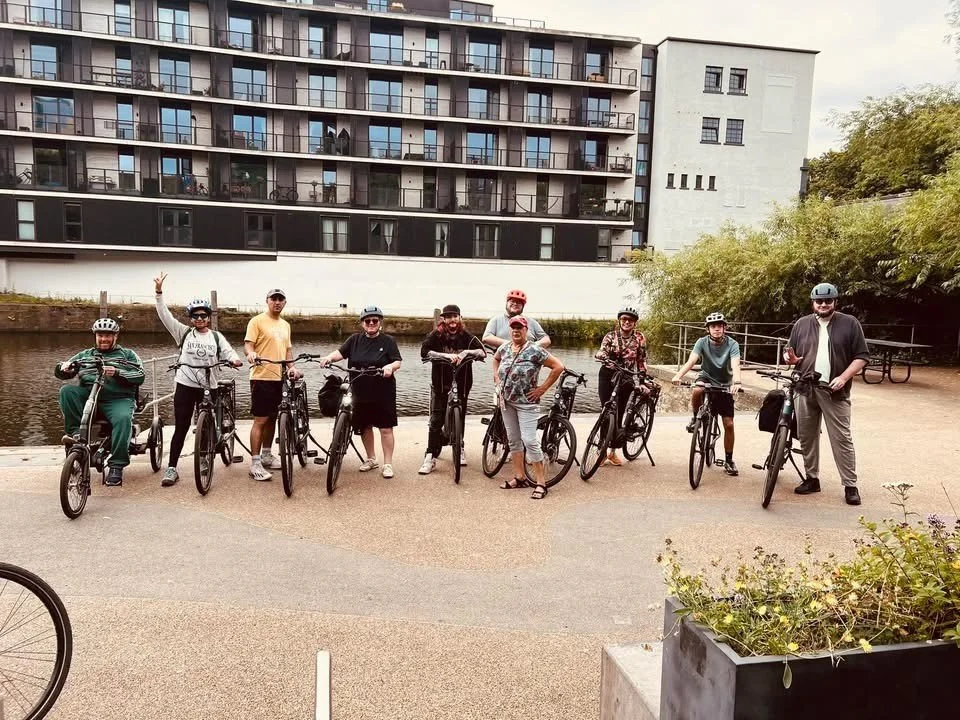
Including walking groups, cycle rides, Dr Bike sessions, and litter picks.
-
Including bike maintenance classes, learn to ride groups, and walk leader training.
-
Routes for residents to have a voice in the develop of new walking, wheeling and cycling infrastructure.
The group had a vision to develop a library of resources that would be available across Pilton that supported local residents to walk, wheel and cycle more. This included building:
The Vision
Once the vision was agreed and a plan put in place, local organisations agreed who would do what and funds were distributed to support the work.
While only 8 local organisations are involved in delivery, many more benefit, for example
Dr Bikes are delivered a various community venues and events at no cost to local organisations.
Bikes from the bike library are available for any local organisation and resident to borrow.
Experienced bike leaders will support groups from other organisations to learn to ride, with bikes from the bike library!
A variety of organisations contributed to a report on local wishes and needs from the new cycle infrastructure. Organisations shared what they were hearing in walking and cycling groups, parents’ thoughts on play facilities and young people’s groups. This gave us a holistic view of what a variety of residents want.
The Work
Sharing delivery against an agreed strategy with a shared pot of funding is possible
We minimise risk of not being able to deliver by sharing this across multiple agencies
This approach lets us collectively reach a much broader range of local residents than any one organisation could reach alone
Collaborative approaches are difficult to fund and this distracts from delivery
Annual funding cycles make it difficult to develop the strategy for the longer term
What we have learned
Joined up approaches to funding place-based strategies
Better adoption of SCVOs Fairer Funding principles
Better engagement from a wider range of public sector partners
What would help